
Why Join Us


Why Join Us??
STEM & ELA based education with programs focused on an All-Round Accelerated Development of your child
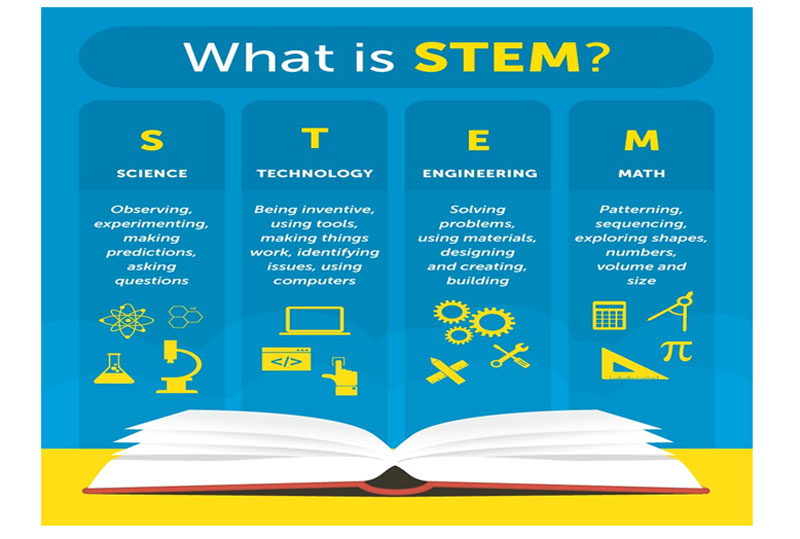
What’s STEM??
What’s ELA??
Focused on Increasing Analysis, Inquiry & Higher Level of Thinking Skills in Text
ELA English Language Arts
In English Language Arts (ELA) students learn to become effective readers and writers. Teachers use a balance of complex fiction and non-fiction texts in the classroom and teach reading, writing, vocabulary and discussion with an emphasis on using details and evidence from the text.
Reading
Independent reading can transform students' understanding of themselves and the world they live in. Independent reading should be a place where joy and learning come together. While students should work to grow and read increasingly complex texts, we also want them to develop a love of reading.
Writing
We live in an age of email and digital texts, which means writing skills are more important than ever. Because writing is so important in higher education and in the workplace, students must be able to communicate well using many forms of writing, such as:
- Editorials
- Presentations
- Reports
- Research
- Proposals
- Memos
- Literary Analyses
Teaching students to express themselves creatively is equally important. While only a handful of students may become professional writers, learning to write fiction, poetry, and narrative nonfiction offers them new ways to think, share, and reflect on the deeper questions of life.
Vocabulary
Learning new words—vocabulary—is one of the most important parts of becoming literate. The larger children’s vocabularies are in the primary grades, the greater their academic achievement will be in the later grades. Vocabulary has a direct relationship with reading comprehension, especially as children move up the Grades.
Overview On The Programs
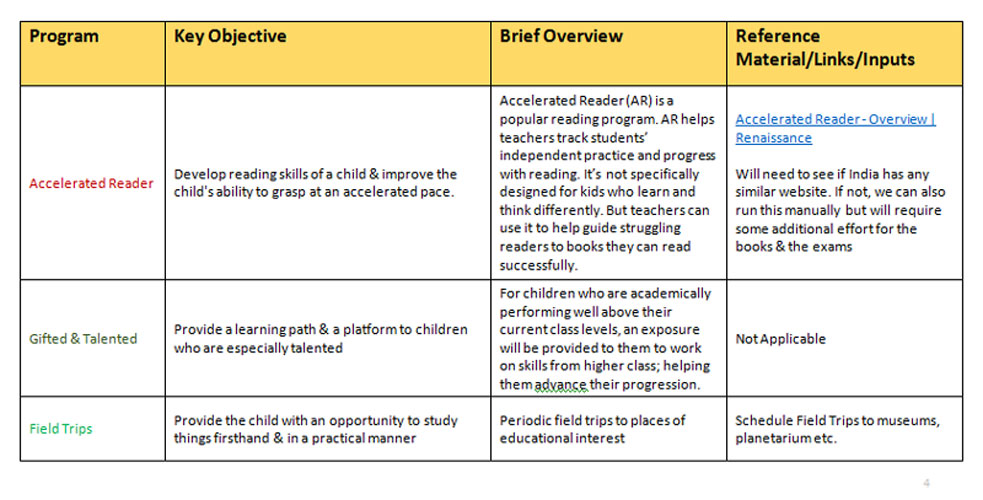
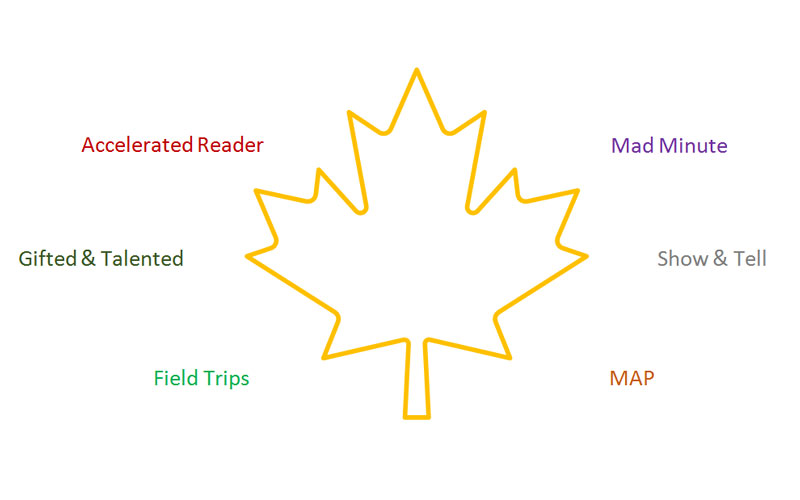
Overview On The Programs
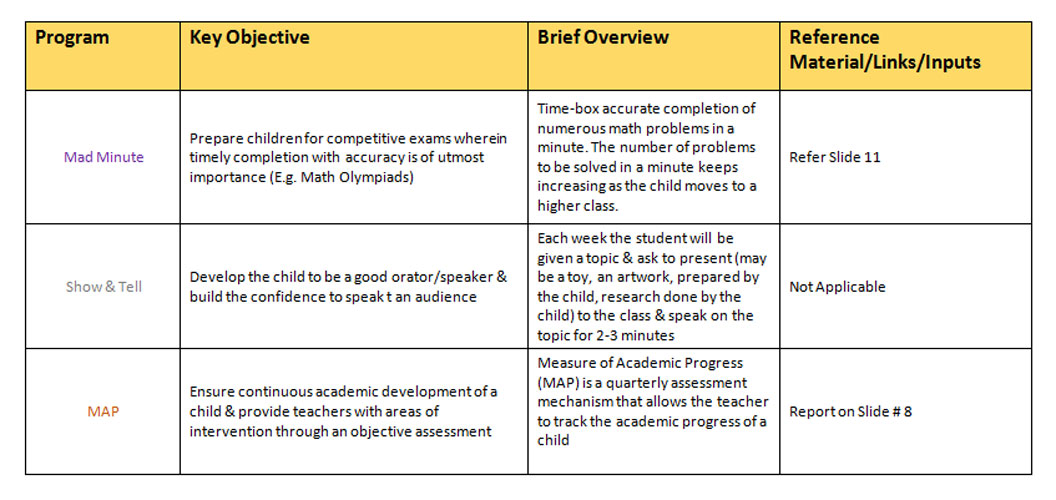
Other Inputs
- Glowing Maple (Leading Student) of the Month – Child excelling in academics & behavior and acting as a role model
- Spelling Bee
- Grading System – EP (Excellent Performance), GP (Good Performance), SP (Satisfactory Performance), LP (Low Performance
- Weekly Study & Behavior Monitoring (will send a reference report next week)
- 4 Grading Periods
- Quarterly Parent Teacher Conferences